Open data myths debunked
| 12 October, 2021 | Hollydawn Murray |

If you’re new to the concept of open data, you might be wondering how you separate the facts from the fiction to decide what is right for you and your research. Today, we’re debunking some of the most common myths surrounding open data. We’ll cover all the questions you might be asking yourself: “Is data sharing even a ‘thing’ in my field? Do I have the rights to share my data? Will my research be scooped if I share my data?” In this blog post, you’ll find the answers to these questions and more.
Myth #1: I don’t have any data
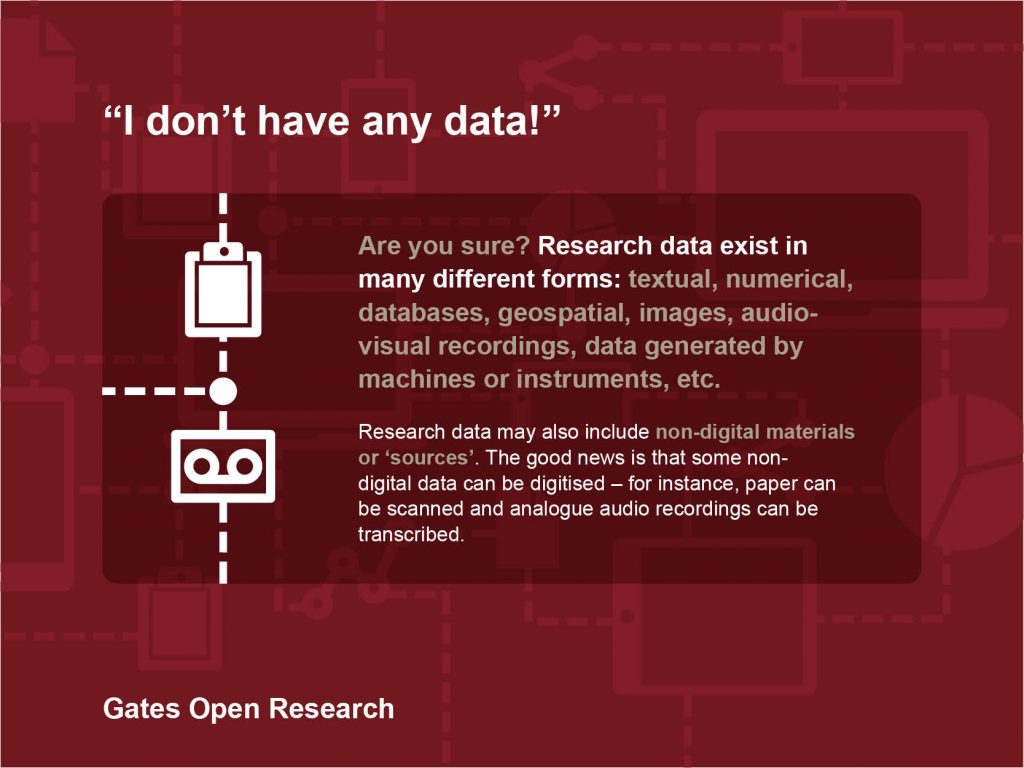
Where published work genuinely has no data associated with it, it’s best to indicate this clearly in a data availability statement. This confirms the absence of data to readers, rather than the absence of data sharing.
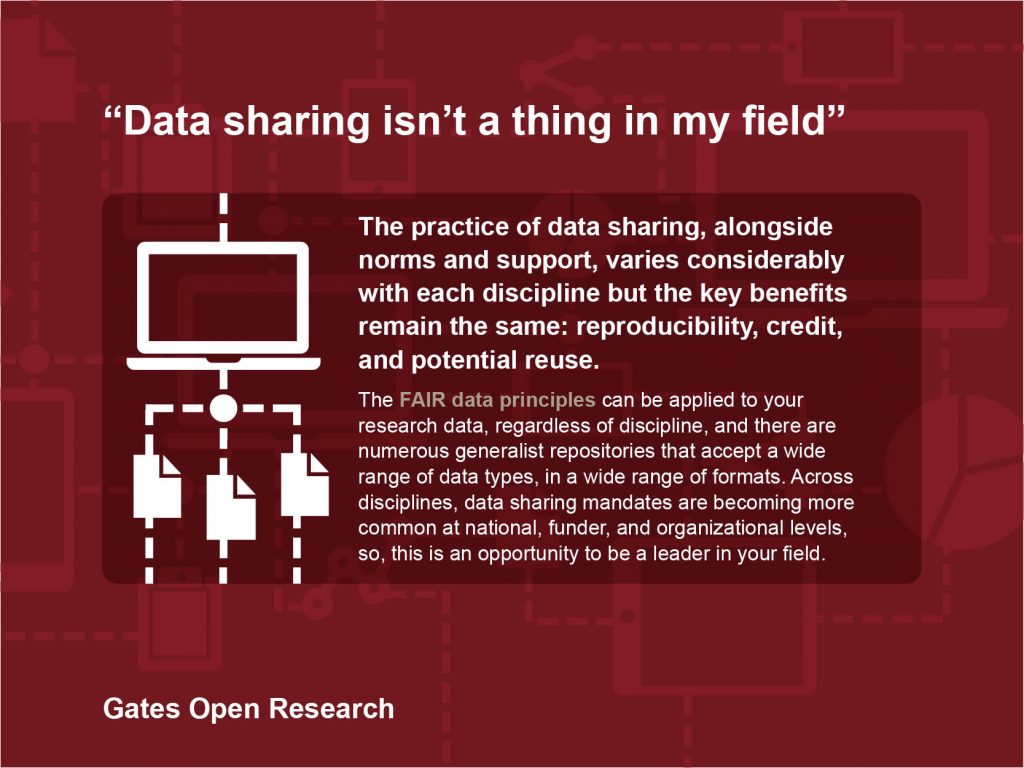
Myth #2: Dating sharing isn’t a ‘thing’ in my field
Myth #3: Data sharing is too hard
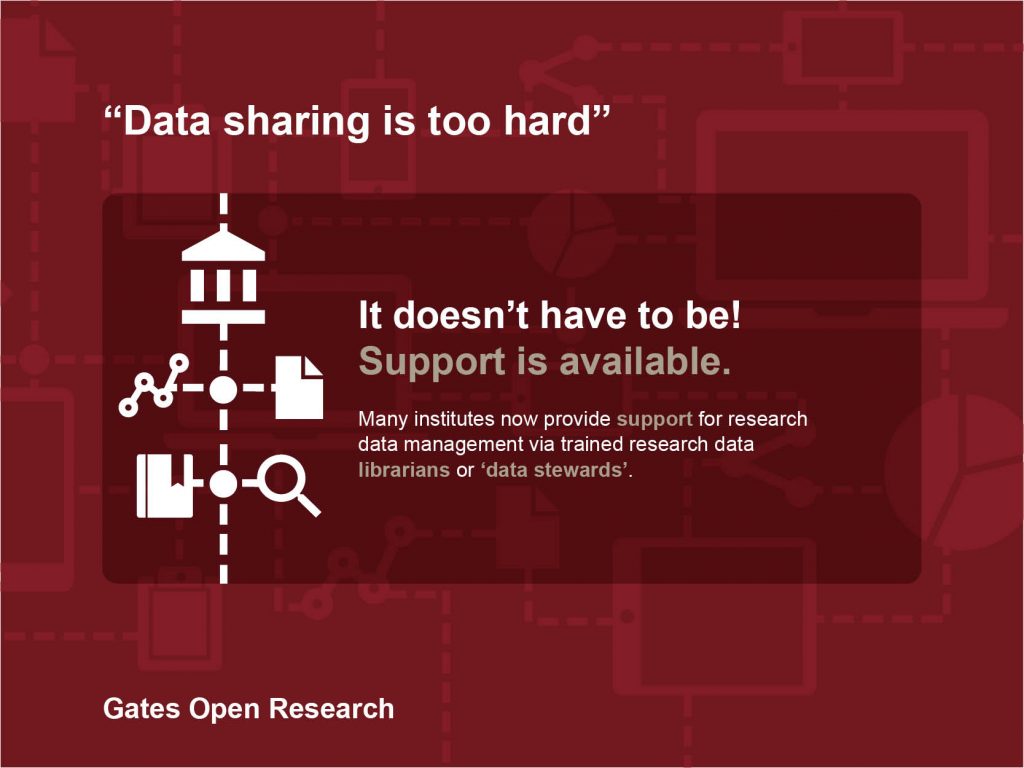
Data stewards can help with expert disciplinary guidance for data sharing and facilitate early planning using a data management plan. Beyond this, many funders have started allowing data management to be included in project budgets. It’s important to allocate resources for research data management in future proposals.
Myth #4: I don’t have the rights to share my data

Myth #5: My data is too sensitive to share
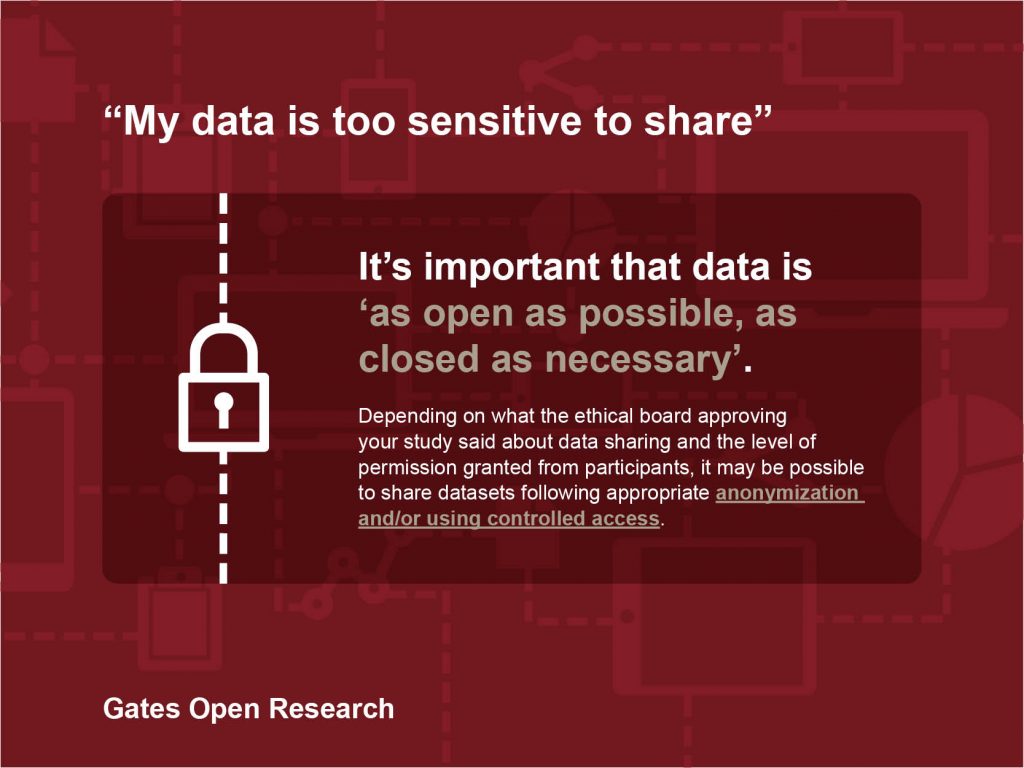
Still can’t share your data?
Then, share your metadata! You can openly publish a description of your data (known as a ‘metadata record’). This helps others to discover your data and provides essential information about how the data can be accessed and cited.
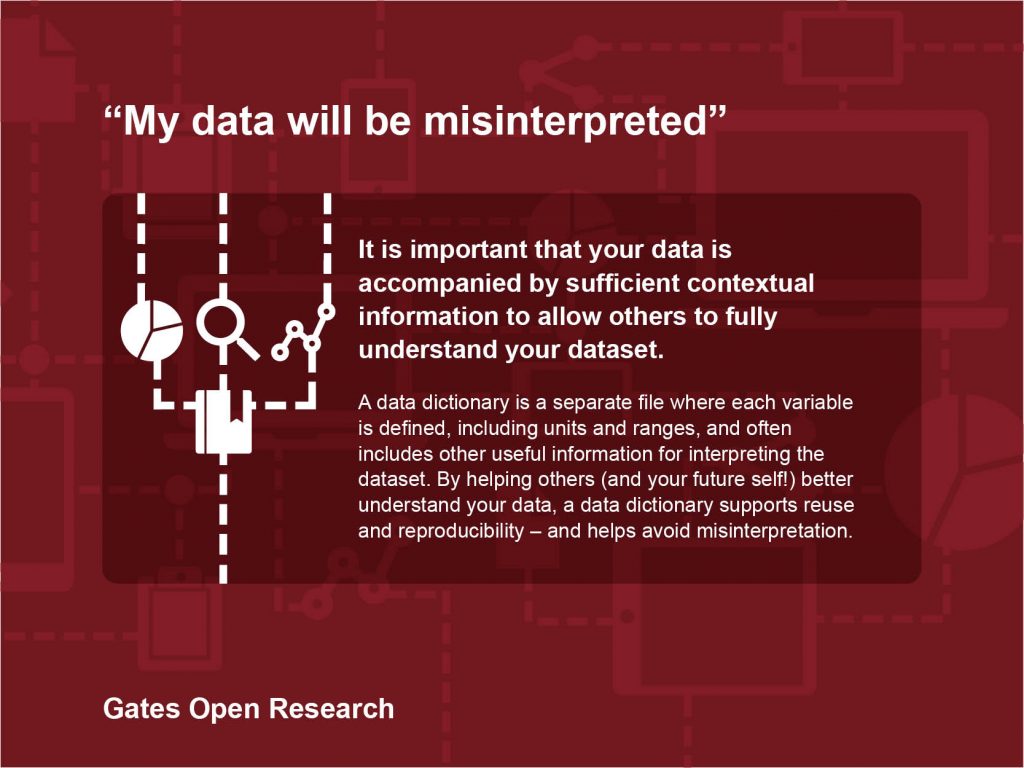
For example, you could post a “data codebook” or “data dictionary” in a repository that describes the variables used in your dataset. In this document, you can cite the article in which it appears in order to connect the data description to the paper. Similarly, you can cite the metadata record in your article as part of a data availability statement, which should also include the conditions under which your data can be accessed.
Myth #6: My data will be misinterpreted
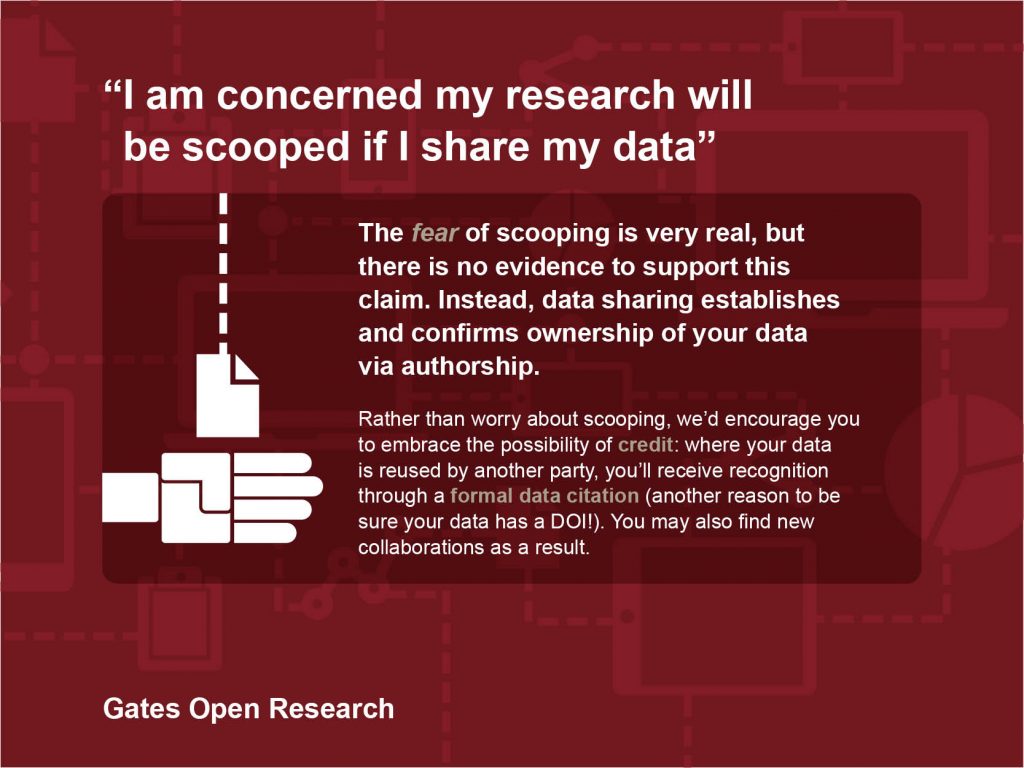
Myth #7: My research will be scooped if I share my data
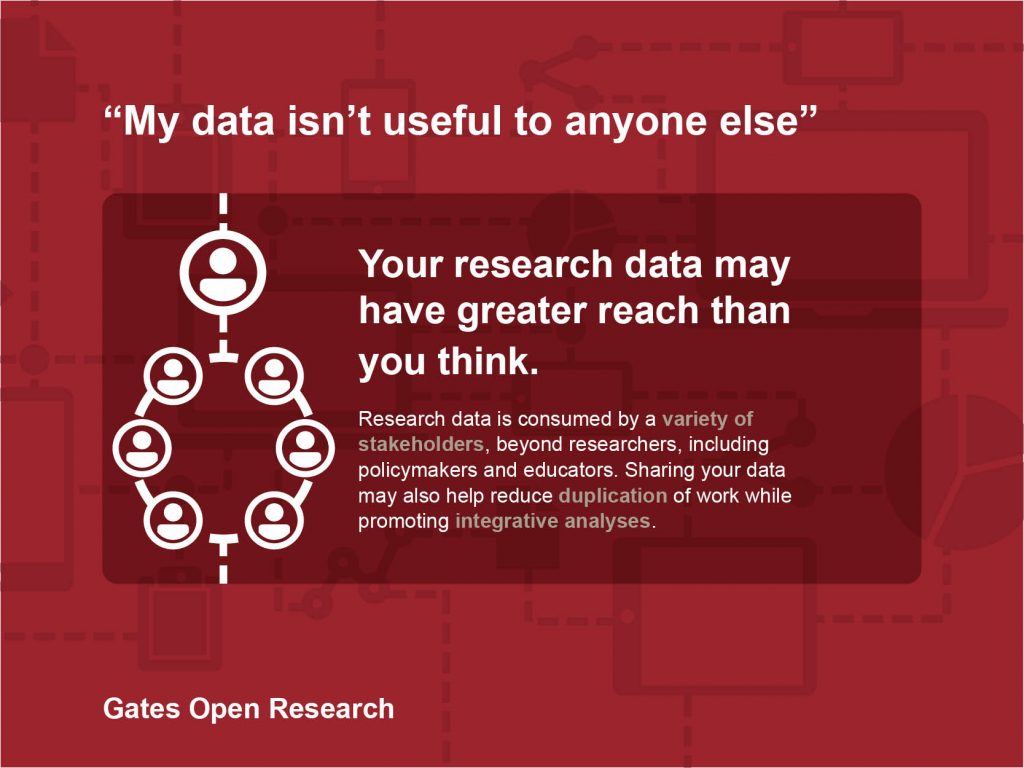
Myth #8: My data isn’t useful to anyone else
We hope this breakdown of some of the most common open data myths brings you closer to realizing the diversity, richness, and ownership that data sharing provides. To learn more about why open data is so important, read our interview with Gates Open Research Advisory Board Member, Carly Strasser.


COMMENTS